




Digital audiences are becoming harder to impress. Every day, people scroll through countless posts, videos, ads, and articles competing for their attention. As content saturation continues to increase, brands are looking for new ways to stand out and create meaningful interactions with their audiences.
One of the most effective solutions is interactive content.
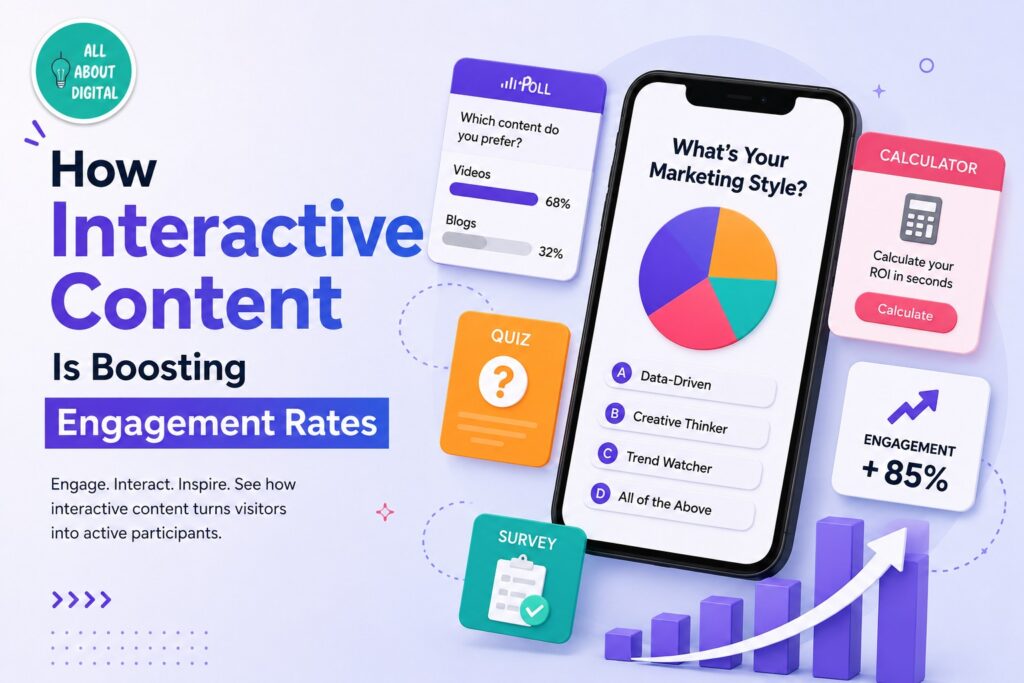
Unlike traditional content formats that require users to simply read or watch, interactive content encourages participation. Whether it’s a quiz, poll, calculator, assessment, or interactive video, these experiences invite users to engage directly with the content, making it more memorable and impactful.
In 2026, interactive content has become a key part of successful interactive marketing strategies for audience engagement. Businesses across industries are using it to improve engagement, generate leads, personalize customer experiences, and increase conversions.
What Is Interactive Content?
Interactive content refers to any digital content format that requires active participation from users.
Common examples include:
- Quizzes
- Polls
- Surveys
- Assessments
- Interactive infographics
- Product finders
- Cost calculators
- Configurators
- Clickable presentations
- Interactive videos
Unlike static content, which delivers information in a one-way format, interactive content creates a two-way experience. Users become part of the journey instead of simply observing it.
This simple shift often leads to stronger engagement metrics, better retention, and improved conversion performance.
Why Interactive Content Is Increasing Engagement Rates
1. It Turns Passive Users into Active Participants
One of the biggest reasons interactive content performs so well is participation.
Traditional content asks users to consume information. Interactive content asks them to contribute.
When users answer quiz questions, vote in polls, or interact with clickable elements, they become actively involved in the experience. This participation creates a stronger emotional connection with the content and the brand behind it.
The more engaged users are, the more likely they are to remember your message and take action later.
This is why interactive posts for social media are becoming increasingly popular across platforms like Instagram, Facebook, LinkedIn, and X.
2. It Increases Time on Page
Keeping visitors on your website longer is one of the most effective ways to improve engagement.
Interactive experiences naturally extend user sessions because visitors must:
- Click through questions
- Explore options
- Compare results
- Review personalized recommendations
Instead of quickly skimming a page and leaving, users spend more time interacting with the content.
This is one of the key benefits of using rich media to engage your site visitors. Interactive experiences encourage exploration, creating opportunities to educate audiences and move them further through the marketing funnel.
3. It Creates Personalized Experiences
Modern consumers expect personalization.
Interactive content allows brands to deliver tailored experiences based on user input.
For example:
- A skincare quiz can recommend products based on skin type.
- A financial calculator can provide customized estimates.
- A product finder can suggest the best solution based on customer needs.
When content adapts to user responses, it feels more relevant and valuable.
This personalized approach often generates higher engagement rates because users feel the content is specifically designed for them.
4. It Supports Lead Generation
Interactive content is also a powerful lead generation tool.
Many businesses use:
- Quizzes
- Assessments
- Calculators
- Product recommendation tools
to collect contact information before displaying results.
This strategy works because users perceive the exchange as valuable.
Instead of simply asking for an email address, brands provide useful insights, recommendations, or personalized results in return.
As a result, lead capture often feels less intrusive and more rewarding for the user.
5. It Simplifies Complex Information
Some products, services, and industries are difficult to explain through traditional content alone.
Interactive content can make complicated topics easier to understand by allowing users to explore information at their own pace.
This is especially useful for industries such as:
- Finance
- Healthcare
- Education
- Technology
- Real estate
- Software
- Ecommerce
Interactive calculators, comparison tools, and visual experiences help simplify decision-making and improve understanding.
When users understand value more quickly, they are more likely to engage and convert.
6. It Encourages Social Sharing
People enjoy sharing experiences that feel personal, entertaining, or insightful.
Interactive content naturally supports this behavior.
Examples include:
- Personality quizzes
- Poll results
- Interactive challenges
- Knowledge tests
- Fun assessments
These formats often generate social conversations because users want to share their results with friends and followers.
This is one reason why interactive posts for social media continue to generate strong organic engagement and visibility.
When users share content voluntarily, brands can expand their reach without significantly increasing advertising costs.
7. It Provides Valuable Customer Insights
Interactive content doesn’t just engage audiences—it also helps brands learn more about them.
Every click, answer, selection, and interaction provides valuable information about customer preferences and behaviors.
Brands can use this data to:
- Improve audience segmentation
- Personalize email campaigns
- Refine content strategies
- Optimize product recommendations
- Identify customer pain points
Because this information comes directly from user interactions, it is often more reliable than assumptions or demographic targeting alone.
Best Types of Interactive Content for Engagement
Quizzes
Quizzes remain one of the most effective interactive formats because they are:
- Entertaining
- Easy to complete
- Highly shareable
- Personalized
They work particularly well for lead generation and audience segmentation.
Polls
Polls are quick, simple, and low-friction.
They are ideal for:
- Social media engagement
- Audience research
- Community building
- Gathering opinions
Calculators
Calculators provide immediate practical value.
Popular examples include:
- Savings calculators
- ROI calculators
- Mortgage calculators
- Cost estimators
These tools are highly effective for lead generation and conversion-focused campaigns.
Assessments
Assessments offer personalized insights and recommendations.
They help users better understand their situation while giving businesses useful qualification data.
Interactive Infographics
Interactive infographics allow users to explore information dynamically rather than viewing static charts and graphics.
This improves understanding while making data more engaging.
Product Finders
Product recommendation tools simplify decision-making and reduce overwhelm.
By guiding users toward suitable options, they improve both engagement and conversion rates.
Interactive Video: The Next Level of Engagement
One of the fastest-growing trends in 2026 is interactive video.
Brands increasingly use clickable videos that allow users to:
- Choose different paths
- Explore products
- Answer questions
- Access additional information
Businesses that drive engagement with interactive video often see higher completion rates compared to standard video content.
Interactive video combines the power of storytelling with user participation, making it one of the most effective engagement tools available today.
For brands seeking innovative ways to drive engagement with interactive video, the opportunities continue to expand as technology evolves.
In fact, many marketers now consider the ability to drive engagement with interactive video a critical component of modern content strategies.
How to Use Interactive Content Effectively
To maximize results:
Start with a Clear Goal
Choose a primary objective such as:
- Engagement
- Lead generation
- Product education
- Sales conversion
Your goal should determine the type of interactive content you create.
Keep It Simple
Complex experiences can create friction.
Focus on:
- Easy navigation
- Short completion times
- Clear instructions
- User-friendly design
Deliver Immediate Value
The best interactive experiences provide users with:
- Useful insights
- Personalized recommendations
- Practical solutions
- Actionable feedback
Value should always come before promotion.
Promote It Across Channels
Even great content needs visibility.
Share interactive experiences through:
- Social media
- Email marketing
- Paid advertising
- Website banners
- Landing pages
Effective distribution significantly increases performance.
Common Mistakes to Avoid
Many brands struggle because they:
- Create interactive content without a clear purpose
- Overcomplicate the user experience
- Ask for too much information too early
- Deliver weak or generic results
- Fail to promote the content effectively
Successful interactive marketing strategies for audience engagement focus on simplicity, relevance, and value.
Conclusion
Interactive content is transforming digital marketing because it changes audiences from passive viewers into active participants. By encouraging involvement, brands can increase engagement, extend time on site, improve personalization, generate higher-quality leads, and gain deeper customer insights.
Whether through quizzes, polls, calculators, assessments, or innovative ways to drive engagement with interactive video, interactive experiences are becoming essential tools for modern marketers. Combined with interactive posts for social media and using rich media to engage your site visitors, businesses can create stronger relationships with their audiences and achieve measurable marketing results.
At All About Digital, we help businesses develop data-driven interactive marketing strategies for audience engagement that increase visibility, strengthen customer relationships, and drive real business growth. From interactive campaigns and social media engagement to content strategy and performance marketing, our team helps brands create meaningful digital experiences that stand out in today’s competitive online landscape.