




Social media has evolved far beyond a platform for entertainment and personal updates. Today, millions of users turn to Instagram, LinkedIn, YouTube, Facebook, and TikTok to learn new skills, solve problems, and discover valuable information.
As a result, educational content has become one of the most powerful forms of digital marketing. Instead of simply capturing attention for a few seconds, it delivers real value that builds trust, encourages engagement, and creates long-term audience relationships.
In an online environment crowded with advertisements, trends, and promotional messages, educational content stands out because it helps people achieve something useful. Whether through tutorials, guides, tips, explainers, or industry insights, educational content is becoming the foundation of successful social media strategies.
Why Audiences Prefer Educational Content
Modern consumers want more than entertainment. They also want information that helps them make decisions, learn new skills, and solve everyday challenges.
Educational content succeeds because it provides immediate value. Instead of asking for attention without giving anything in return, it rewards users with knowledge and practical insights.
This is why many brands are shifting their focus from purely promotional campaigns toward an educational versus entertaining content strategy that balances engagement with usefulness.
When people gain value from your content, they are more likely to:
- Stop scrolling
- Watch longer
- Save posts
- Share content
- Follow your account
- Trust your brand
1. Educational Content Builds Trust Faster
Trust is one of the most important factors in marketing.
People prefer buying from businesses they view as knowledgeable and credible.
Educational content demonstrates expertise by helping audiences solve problems without immediately asking for a sale.
For example:
- A digital marketing agency can explain SEO basics.
- A fitness trainer can share workout tips.
- A school can provide learning resources.
- An edtech company can offer study strategies.
This approach positions the brand as a trusted advisor rather than just another advertiser.
Over time, educational content naturally strengthens authority and brand reputation.
2. It Generates More Saves and Shares
One reason educational content performs exceptionally well is because it is highly shareable.
Users often save educational posts because they want to revisit the information later.
Similarly, they share useful content because it helps friends, colleagues, students, or family members.
These actions send strong engagement signals to social media platforms.
As a result, educational content often receives:
- Higher reach
- Better visibility
- Increased engagement
- Longer content lifespan
Unlike promotional posts that quickly lose relevance, educational content can continue generating value for months or even years.
3. Algorithms Favor Valuable Content
Social media algorithms prioritize content that keeps users engaged.
Educational posts frequently outperform promotional content because they:
- Encourage longer watch times
- Generate comments
- Increase saves
- Inspire shares
- Create repeat views
A well-structured tutorial or explanation often captures attention more effectively than a direct advertisement.
This means brands can achieve significant organic reach without relying entirely on paid advertising.
4. It Matches Modern Search Behavior
Social media platforms increasingly function as search engines.
Users frequently search for:
- How-to guides
- Product recommendations
- Industry tips
- Tutorials
- Comparisons
- Educational resources
Platforms such as YouTube, Instagram, TikTok, and LinkedIn are now major sources of information discovery.
Educational content aligns perfectly with this behavior because it provides the answers people are actively seeking.
Businesses that consistently create educational content can benefit from both social engagement and search visibility.
5. It Supports Every Stage of the Customer Journey
One of the biggest advantages of educational content is its versatility.
It can support customers at every stage of the buying process.
Awareness Stage
Educational content introduces audiences to new ideas and solutions.
Consideration Stage
Detailed guides help potential customers evaluate options and understand benefits.
Decision Stage
Product demonstrations, FAQs, and tutorials provide confidence before purchasing.
This makes educational content an essential component of modern marketing strategies.
6. It Feels Less Promotional
Consumers are increasingly resistant to aggressive advertising.
Educational content offers a different approach.
Instead of constantly selling, brands focus on helping.
This value-first strategy creates stronger relationships because audiences feel supported rather than targeted.
The best examples of an educational versus entertaining content strategy often combine useful information with engaging presentation, creating content that is both informative and enjoyable.
7. Educational Content Works Across Multiple Formats
Another reason educational content dominates social media is its adaptability.
A single idea can be transformed into multiple formats, including:
- Carousel posts
- Short-form videos
- Infographics
- Blog articles
- Checklists
- Live sessions
- Podcasts
- Email newsletters
This flexibility makes it easier for brands to scale content production and reach audiences across different platforms.
Many marketers successfully use how to use blogs articles educational content for marketing strategies by turning long-form educational content into smaller social media assets.
Best Types of Educational Content
Certain educational formats consistently perform well across industries.
How-To Guides
Step-by-step instructions help audiences solve specific problems quickly.
Tips and Tricks
Short, actionable insights are highly engaging and easy to consume.
Explainers
Explainer content simplifies complicated concepts and improves understanding.
Checklists
People love practical resources they can apply immediately.
Myths vs Facts
These posts address misconceptions and establish credibility.
Mini Tutorials
Quick demonstrations provide instant value while encouraging engagement.
Educational Content in the Education Industry
Educational institutions and edtech companies are among the biggest beneficiaries of content marketing.
Successful edtech marketing strategy initiatives often rely heavily on educational content because their audiences actively seek learning resources.
Examples include:
- Study tips
- Career guidance
- Exam preparation content
- Technology tutorials
- Industry insights
- Learning frameworks
This approach supports both student engagement and lead generation.
Marketing to Educators and Teachers
Schools, training institutes, and educational technology companies increasingly focus on marketing to educators and marketing to teachers through valuable content.
Instead of direct advertising, they share:
- Classroom resources
- Teaching strategies
- Assessment tools
- Educational research
- Professional development tips
This builds trust and encourages long-term relationships with education professionals.
Content Marketing for Schools
Modern institutions increasingly use content marketing for schools and content marketing for public schools to improve visibility and engagement.
Examples include:
- Student success stories
- Learning resources
- Parent guides
- Educational blogs
- Faculty insights
These content types strengthen community relationships while enhancing brand reputation.
The Role of Content Development in Education
Understanding what is content development in education is important for organizations seeking effective educational marketing.
Content development in education involves creating structured learning materials that inform, educate, and engage specific audiences.
Effective content development in education focuses on:
- Clarity
- Relevance
- Accessibility
- Practical application
- Audience needs
Educational content marketing succeeds when these principles guide content creation.
Educational Content and Campaign Management
Many education-focused organizations run multiple campaigns simultaneously.
Successful strategies for managing multiple marketing campaigns in education often involve repurposing educational content across channels.
For example:
- A blog becomes a social media series.
- A webinar becomes short-form video clips.
- A guide becomes an email campaign.
- Research becomes infographic content.
This approach maximizes efficiency while maintaining consistent messaging.
Additionally, educational organizations often share marketing education news and industry updates to establish authority and keep audiences informed.
Common Mistakes to Avoid
While educational content is highly effective, there are several common mistakes brands should avoid.
Making Content Too Complex
Information should be easy to understand.
Overly technical explanations often reduce engagement.
Forgetting Brand Relevance
Educational content should still connect naturally to your products or services.
Lacking Structure
Effective educational content typically includes:
- A strong hook
- A clear explanation
- Practical takeaways
- A relevant call to action
Without structure, even valuable information can lose audience attention.
Conclusion
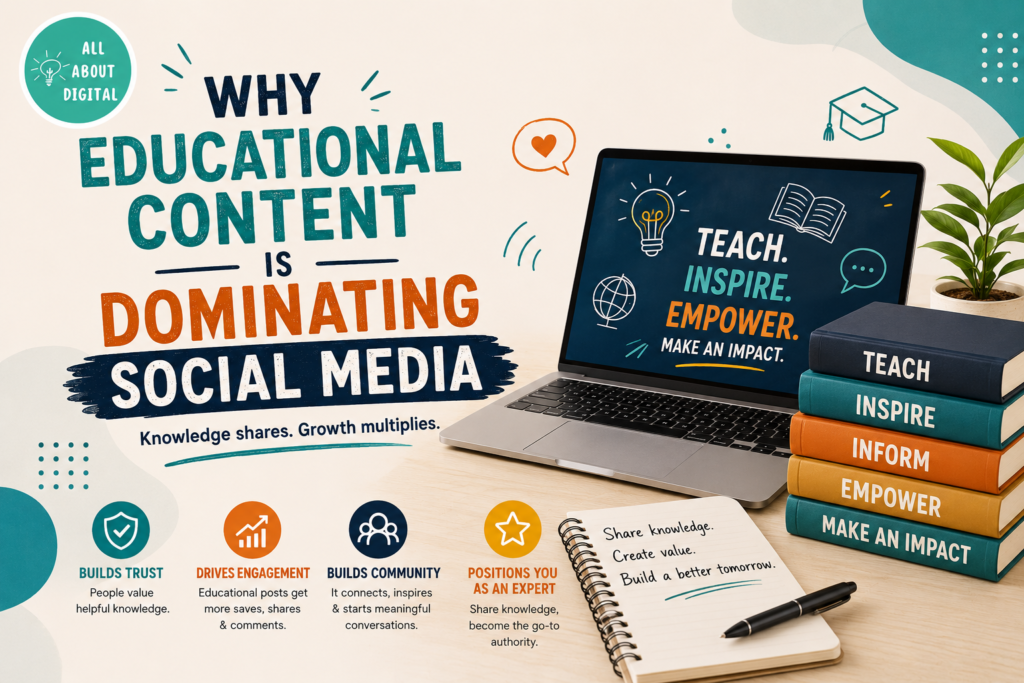
Educational content is dominating social media because it aligns perfectly with how modern audiences learn, search, and make decisions. It builds trust, increases engagement, supports customer education, and creates long-term brand loyalty.
Whether implementing an educational versus entertaining content strategy, developing an edtech marketing strategy, focusing on marketing to educators, or leveraging content marketing for schools, educational content continues to deliver measurable results across industries.
At All About Digital, we help brands create impactful educational content that drives engagement, builds authority, and supports business growth. From social media marketing and content strategy to SEO, video content, and digital campaigns, our team develops value-driven content that helps businesses connect with their audiences and stand out in today’s competitive digital landscape. When brands educate consistently, they don’t just gain attention—they earn trust, loyalty, and long-term success.